
Estate Administration in Delaware County
Estate Administration:
Guidance When You Need It Most
Handling legal and financial responsibilities after the loss of a loved one can feel overwhelming. Estate administration involves a series of required steps that must be completed correctly and within specific timelines under Pennsylvania law. Working with an estate administration attorney helps ensure that these responsibilities are managed with clarity and structure.
KHB Law Group provides guidance throughout the probate and estate administration process, helping executors and families understand what is required and how to move forward.
From validating a will to distributing assets, each stage requires attention to detail and proper legal handling to avoid delays or complications.
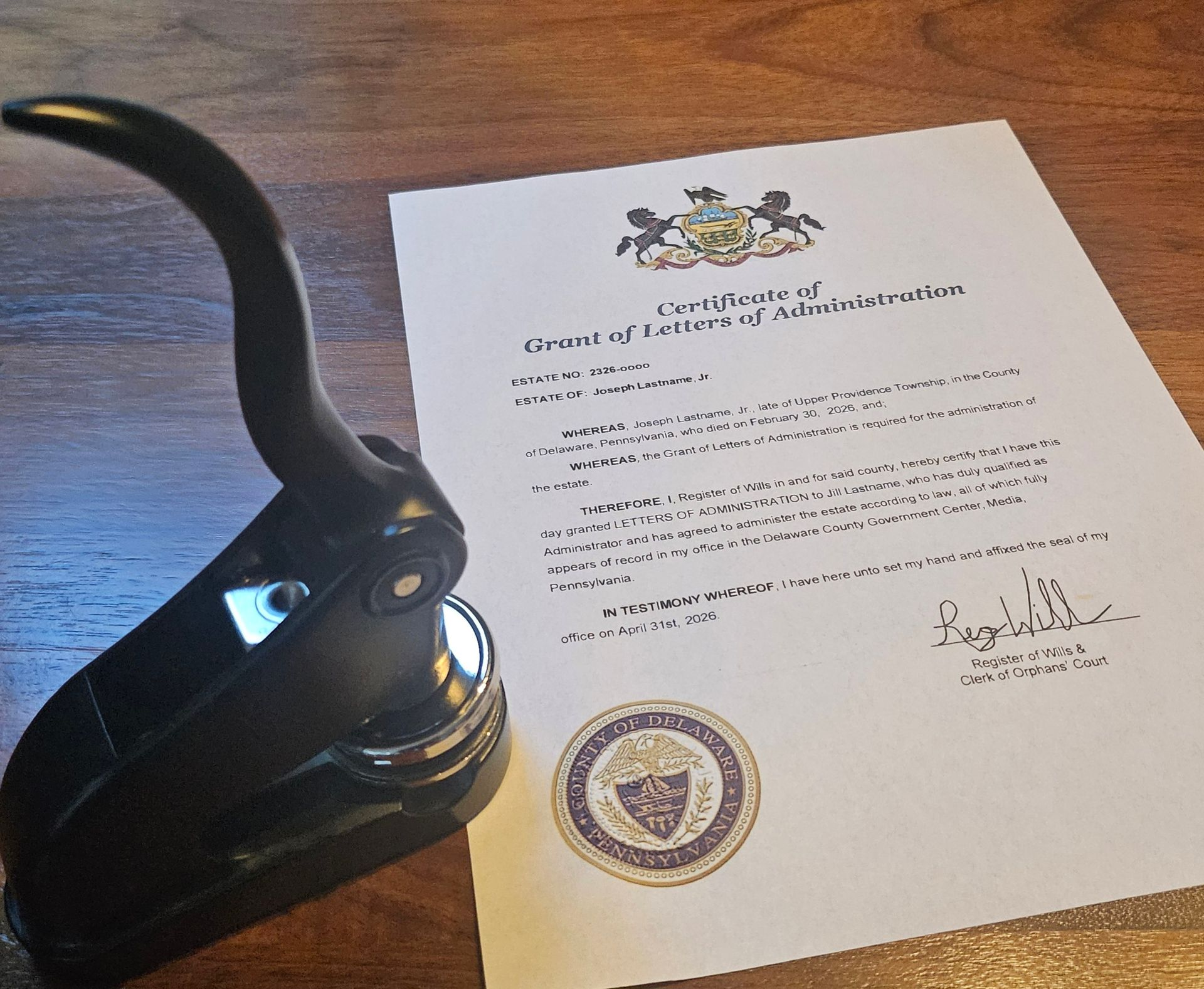
Letters Testamentary and Letters of Administration
are the legal documents that officially authorize a
personal representative to act on behalf of a decedent’s estate.
Understanding Probate and the Legal Process
Probate is the formal legal process that begins estate administration. It establishes the authority of the executor or administrator and ensures that the estate is handled according to the law and the decedent’s wishes.
Probating a Will in Pennsylvania
Probating a will involves presenting the document to the Register of Wills for review. The court verifies that the will is valid and officially appoints the executor named within it. Once appointed, the executor receives legal authority to act on behalf of the estate.
Appointment of Executor or Administrator
If a valid will exists, the named executor is granted authority. If there is no will, the court appoints an administrator to fulfill the same responsibilities. This appointment is essential before any estate-related actions can be taken.
Authority to Manage Estate Affairs
After appointment, the executor or administrator can begin managing the estate. This includes accessing accounts, securing property, and addressing financial obligations. Legal guidance ensures these actions are carried out properly and within the scope of the authority granted.
Administering an Estate Step by Step
Estate administration involves more than simply distributing property. It is a structured legal process that requires careful organization, accurate reporting, and compliance with Pennsylvania requirements.
Identifying and Collecting Assets
The first step in administration is identifying all estate assets. This may include real estate, bank accounts, investments, and personal property. Each asset must be located, documented, and secured as part of the estate.
Paying Debts and Expenses
Outstanding debts and expenses must be addressed before distribution to heirs. This includes funeral costs, taxes, and any valid creditor claims. Proper handling ensures that obligations are satisfied in accordance with the law.
Filing Inheritance Tax Returns
Pennsylvania requires the filing of an inheritance tax return for most estates. This filing must be accurate and submitted within the required timeframe. Legal oversight helps ensure compliance and minimizes the risk of penalties.
Distributing Assets to Beneficiaries
Once debts and taxes are resolved, the remaining assets can be distributed according to the will or, if no will exists, under Pennsylvania intestacy laws. Clear documentation is essential to complete this step properly and avoid disputes.
Legal Guidance Through Each Stage
Estate administration can involve detailed requirements and strict deadlines. Having legal support helps ensure that each step is handled correctly and efficiently.
Clear Communication of Responsibilities
Understanding the responsibilities of an executor or administrator is critical. Legal guidance provides clarity on what actions are required and when they must be completed.
Accurate Preparation and Filing of Documents
Estate administration involves multiple legal documents, including court filings and tax forms. Ensuring these are prepared and submitted correctly helps prevent delays and complications.
Organized and Timely Process Management
Managing an estate requires coordination of many moving parts. Legal support helps keep the process organized, ensuring that tasks are completed in the proper sequence and within required timeframes.
Addressing Common Estate Administration Challenges
Even straightforward estates can present challenges that require careful handling. Proper legal guidance helps address these issues before they become significant problems.
Handling Complex or Varied Assets
Some estates include a variety of asset types that require different handling procedures. Proper identification and valuation are necessary to ensure accurate reporting and distribution.
Meeting Legal Deadlines and Requirements
Estate administration is governed by specific deadlines for filings and notifications. Missing these deadlines can result in penalties or delays. Legal oversight helps ensure compliance at every stage.
Ensuring Proper Distribution
Distributing assets must be done according to legal requirements and documented clearly. This protects both the executor and the beneficiaries and helps prevent future disputes.
A Structured and Manageable Process
Estate administration is a detailed legal process, but it can be handled in an organized and manageable way with the right approach. Each step, from probate to final distribution, must be completed with care and attention to legal requirements.
KHB Law Group assists clients in Media, PA by guiding them through each phase of estate administration. The process is approached with clarity and responsiveness, helping executors and families understand their responsibilities and move forward with confidence.
Moving Forward with Confidence
Administering an estate involves legal, financial, and procedural responsibilities that must be addressed carefully. Working with an estate administration attorney in Media, PA helps ensure that the process is completed correctly and that all requirements are met.
KHB Law Group provides steady guidance throughout probate and estate administration, helping clients navigate each step, answer questions promptly, and complete the process in a clear and structured manner.